


Global Aerospace's SM4 Aviation Safety Program Offers Essentials on Sleep Need vs. Sleep Capacity and The Science of Sleep Banking
Brand Story
06 Jun 2026, 04:32 GMT+10
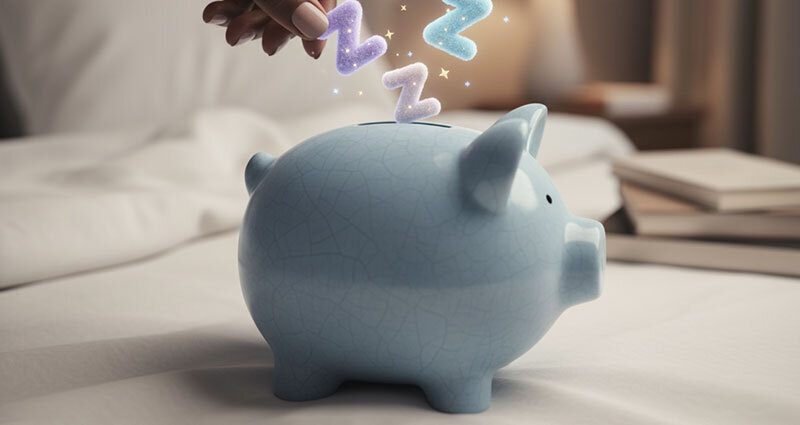
Recall the last time you were on a flight or duty that cut into your natural daily sleep pattern. Chances are you were annoyed at the sleep deprivation but leaned in to combat the fatigue stress with a combination of operational risk controls, personal fatigue countermeasures and grit. With experience, you will prepare for this type of operation by making sure to get a good night's sleep ahead of time. But what about deliberately getting more sleep? Can sleep be 'banked' in advance of encountering a sleep deficit? Global Aerospace's SM4 Aviation Safety Program has answers to these questions and more.
Let's start with a sports analogy. Many ultra-distance endurance athletes will consume excess carbohydrates the day before a race. The idea is to fill up glycogen stores to delay muscle fatigue and maintain stronger output deeper into the event. Even if you don't run ultramarathons, you will be familiar with stocking up on essentials before an impending snowstorm.
Scientists have been debating whether sleep and fatigue follow a similar dynamic since the concept of 'sleep banking' was first proposed by Rupp et al. nearly 20 years ago. The reality of sleep debt-a reflection of chronic sleep deprivation in modern society-was already well understood by then, and it seemed natural to extend the financial metaphor further.
Some sleep experts found that extending nighttime sleep prior to a period of sleep restriction produced measurably reduced deficits in alertness and performance during a subsequent period of restricted sleep. Others, however, questioned whether the investment in more sleep was simply reversing a preexisting sleep debt. A recent paper in the journal Sleep by researchers at the Walter Reed Army Institute of Research aims to settle the debate.
Sleep Need vs. Sleep Capacity
How much do you sleep during the fifth night of a week-long vacation? Allowing for any lingering sleep debts to be paid off during the first few nights, how long you sleep each night in the second half of a vacation is probably the best indication of your daily sleep need.
Due to genetic variations, humans have a daily sleep need that ranges from seven to nine hours for adults. While the need for sleep is obvious, the capacity to sleep is affected by many factors including physical and mental well-being, behavioral choices and even practical limitations. Yet when those factors are controlled, the researchers found that the human brain will accumulate a surplus of 'sleep-dependent restorative resources' when given the chance.
In other words, we do have the capacity to invest in excess sleep. This idea is supported by a finding in a 2015 study of sleep patterns in people who live far enough from the equator to experience a change of seasons: They sleep 50 minutes longer each night in winter, on average, than during the summer.
The Science of Sleep Banking
Having established that excess sleeping is a real thing, the Walter Reed Institute researchers proceed to explore possible mechanisms for how it occurs. One idea centers on the extended clearing of synaptic waste products that have accumulated in the brain over the course of being awake all day-a 'deep cleaning' of sorts. Another hypothesis is that sleep banking increases the brain's supply of glycogen, which gets depleted by the high energy demands of wakefulness.
The scientists assert that sleep banking is a short-term phenomenon and suggest there is a limit to how much sleep can be banked. Based on a study of rats following a sleep banking schedule compared to a control group on a normal sleep schedule, they found that an adaptive process restored sleep pressure to its homeostatic norm after about two weeks.
Yes, But...
Given the new scientific evidence supporting sleep banking, it may be tempting to forgo restorative sleep after a tough duty period, indulge in 'revenge procrastination' to catch up on shows or hobbies and postpone that extra sleep until the last day before resuming work. Be careful. According to a 2018 study by sleep scientist Dr. Elizabeth Klerman and her colleagues, 'Short-term sleep extension does not prevent cumulative impairment from longer-term insufficient sleep durations.'
As an aviation professional in a safety-sensitive role, your peak performance is essential to the operation. You should pay off sleep debts as soon as you can-and invest a little more beyond that when facing tough days, as an additional preventative measure.
About Global Aerospace SM4 Aviation Safety ProgramThe Global Aerospace SM4 Safety Program has revolutionized the way insurance specialists help their clients achieve higher levels of operational safety. SM4 was built on the concept of integrating four critical safety components: planning, prevention, response and recovery. Its mission is to help organizations manage risk, enrich training efforts, strengthen safety culture and improve safety management systems. https://sm4.global-aero.com/
Global Aerospace SM4 Aviation Safety Program Media Contact Suzanne Keneally Vice President, Group Head of Communications +1 973-490-8588
 Share
Share
 Tweet
Tweet
 Share
Share
 Flip
Flip
 Email
Email
Subscribe and Follow
Get a daily dose of Orange County Sun news through our daily email, its complimentary and keeps you fully up to date with world and business news as well.


News RELEASES
Publish news of your business, community or sports group, personnel appointments, major event and more by submitting a news release to Orange County Sun.
More InformationTechs take huge hit on Wall Street Friday

NEW YORK, New York - U.S. stock markets suffered a brutal beating on Friday, with the tech-heavy NASDAQ leading a dramatic sell-off...
Google parent expands equity raise amid AI spending boom

MOUNTAIN VIEW, California: Alphabet has increased the size of its planned equity offerings to US$84.75 billion, underscoring strong...
Trump administration plans fresh tariffs on key partners
WASHINGTON, D.C.: The Trump administration has proposed new tariffs of 10 percent or more on imports from dozens of major U.S. trading...
Washington targets Iranian digital asset firms in crackdown

WASHINGTON, D.C.: The Trump administration this week imposed sanctions on Iran's largest digital asset exchange and three other cryptocurrency...
U.S. stocks end divided Thursday but Dow notches up huge gain

NEW YORK, New York - U.S. stocks closed sharply higher on Thursday, led by a blockbuster rally in the Dow Jones Industrial Average,...
SpaceX seeks $75 billion raise in unprecedented public debut
NEW YORK CITY, New York: Elon Musk's SpaceX is planning an unprecedented stock market debut, aiming to raise a record US$75 billion...
Dublin GP found guilty over anti-vaccine posts

DUBLIN, Ireland: A general practitioner and former member of the Medical Council has been found guilty of professional misconduct because...
China criticizes Rubio for comments on Tiananmen protest anniversary
BEIJING/TAIPEI: China, on June 4, strongly criticized comments made by U.S. Secretary of State Marco Rubio about the deadly crackdown...
Prospects for ending war hit as Hezbollah rejects ceasefire deal

DUBAI/BEIRUT: The Iran-backed Hezbollah group rejected a new ceasefire in Lebanon on June 4, while Israel said it would not pull its...
Criminals in Ireland grooming children to work in drug trade

DUBLIN, Ireland: Children as young as seven are being targeted by criminal gangs in parts of Ireland and trained to carry drugs and...
Washington targets Iranian digital asset firms in crackdown
WASHINGTON, D.C.: The Trump administration this week imposed sanctions on Iran's largest digital asset exchange and three other cryptocurrency...
Storm Jangmi hit Japan; train, air travel, and power lines affected
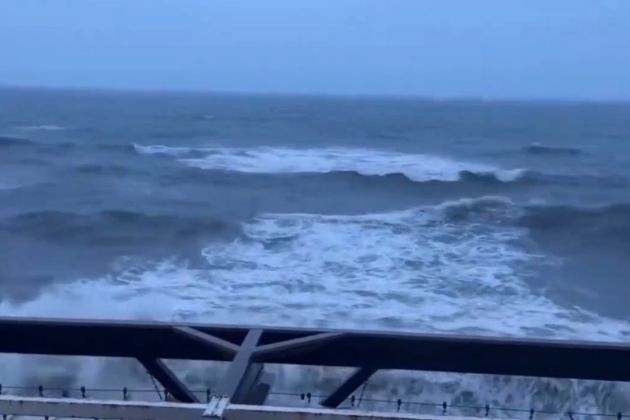
TOKYO, Japan: Severe tropical storm Jangmi hit Japan on June 3, bringing strong winds and heavy rain that disrupted transport and businesses...
